
Water heaters
Water heater repair
Most no-hot-water problems come from a failed heating element or thermostat (electric) or a thermocouple, igniter or gas-valve issue (gas), and are repairable. A leak from the tank body itself isn't repairable — the tank needs replacement.
- Cause diagnosed first
- Written price before work
- Permits pulled where required
- Urgent calls prioritized
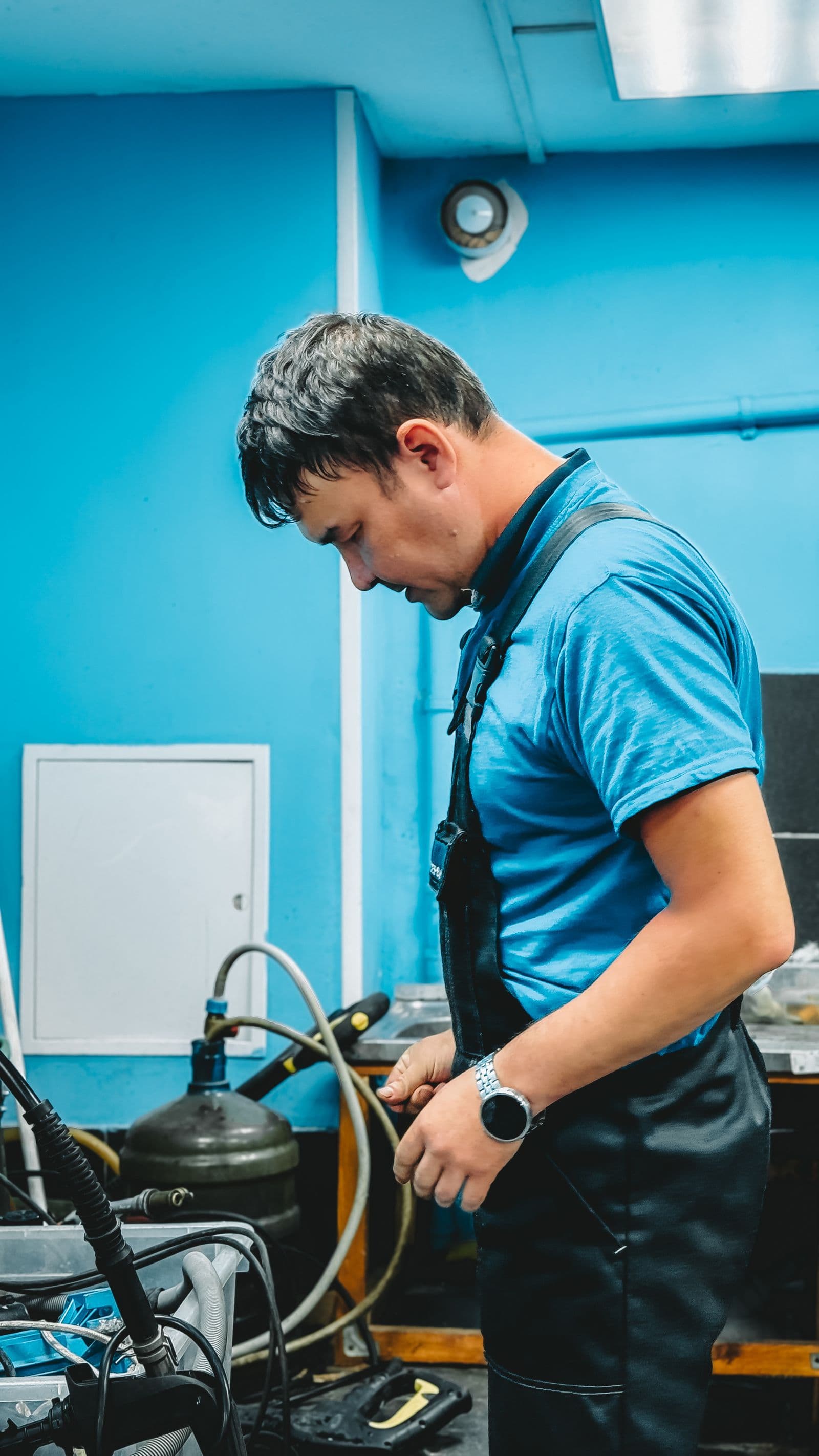
Water heaters fail in a small number of ways, and most of them are fixable in one visit when the truck carries the common parts. The exception is a tank that's leaking from the shell: once the inner lining rusts through, nothing stops it.
We'll tell you which one you have, the age of the unit from its serial number, and whether a repair is worth it on a heater near the end of its life.
Water Heater Repair at a glance
- What it is
- Most no-hot-water problems come from a failed heating element or thermostat (electric) or a thermocouple, igniter or gas-valve issue (gas), and are repairable.
- Service category
- Water heaters
- Where
- 19 towns across the Charlotte metro (NC and York County, SC)
- Urgent service
- Call for current availability — urgent leaks and backups are prioritized.
- Pricing
- Written price after diagnosis, before any work starts.
Signs you need water heater help
- No hot water, or hot water runs out quickly
- Water pooling around the base
- Rumbling or popping from the tank (sediment)
- Rusty or smelly hot water
- Pilot won't stay lit
The visit
What the visit involves
- 1
Diagnose
Test elements, thermostats, gas controls, venting and the temperature/pressure relief valve.
- 2
Explain options
Repair cost vs. the heater's age and condition, in writing.
- 3
Repair
Common parts are carried on the truck. Anode rods and flushing where sediment is the issue.
- 4
Safety check
Relief valve, venting and gas connections checked before we leave.
What affects the cost
We don't publish flat prices for work that depends on what we find. These are the things that move the number — you'll get a written price before any work starts.
- Gas vs. electric vs. tankless
- Which part failed
- Age and warranty status
- Access (attic and tight closet installs take longer)
Before you call
What's safe to try yourself
Safe to do yourself
- •Check the breaker (electric) or that the pilot is lit (gas)
- •Check the thermostat setting
- •Turn off the cold supply and power/gas if the tank is leaking
Stop and call a plumber if
- •You smell gas
- •The relief valve is discharging
- •Water is leaking from the tank body
Water Heater Repair: common questions
Why is my water heater leaking?
Leaks come from the relief valve, the drain valve, the supply connections, or the tank itself. The first three are repairable. A leak from the tank body means the tank has corroded through and needs replacing.
Why is my water heater not heating?
On electric heaters, a tripped breaker, failed element or thermostat are most common. On gas heaters, it's usually the pilot, thermocouple or igniter. A plumber can test each part in one visit.
Is it worth repairing an old water heater?
Tank heaters commonly last around 8–12 years. If yours is in that range and needs a major part, replacement often makes more financial sense. We'll show you the age from the serial number.
How long does a water heater last?
Tank water heaters commonly last about 8–12 years and tankless units longer with regular descaling. The manufacture date is encoded in the serial number on the label.
Why is my water heater making noise?
Rumbling or popping is usually sediment at the bottom of the tank boiling as the burner or element heats through it. Flushing helps on a younger tank; heavy sediment in an older tank is a sign it's near the end of its life.
Why does my hot water smell like rotten eggs?
Sulfur smell in hot water only is typically a reaction between bacteria in the water and the tank's anode rod. Replacing the anode with a different type often solves it; it's more common with well water.
Is a dripping relief valve dangerous?
A temperature-and-pressure relief valve that drips is releasing excess pressure or has failed. Don't cap or plug it — have the thermostat, water pressure and expansion tank checked, and replace the valve if it's faulty.
Service area
Water Heater Repair across the Charlotte metro
Related
Related services
Water Heater Installation & Replacement
Replacing a water heater means sizing a new unit to your household, installing it to current code (expansion tank, relief valve drain, venting, drain pan where required), pulling the permit, and hauling away the old one..
Learn moreTankless Water Heaters
A tankless water heater heats water on demand instead of storing it.
Learn more
Leak Detection
Plumbers find hidden leaks by isolating sections of plumbing and testing them, then pinpointing the spot with acoustic listening, thermal imaging and moisture meters — so only a small, targeted opening is needed for the repair..
Learn moreGet help with your water heater
Call for current availability — urgent leaks and backups are prioritized.