
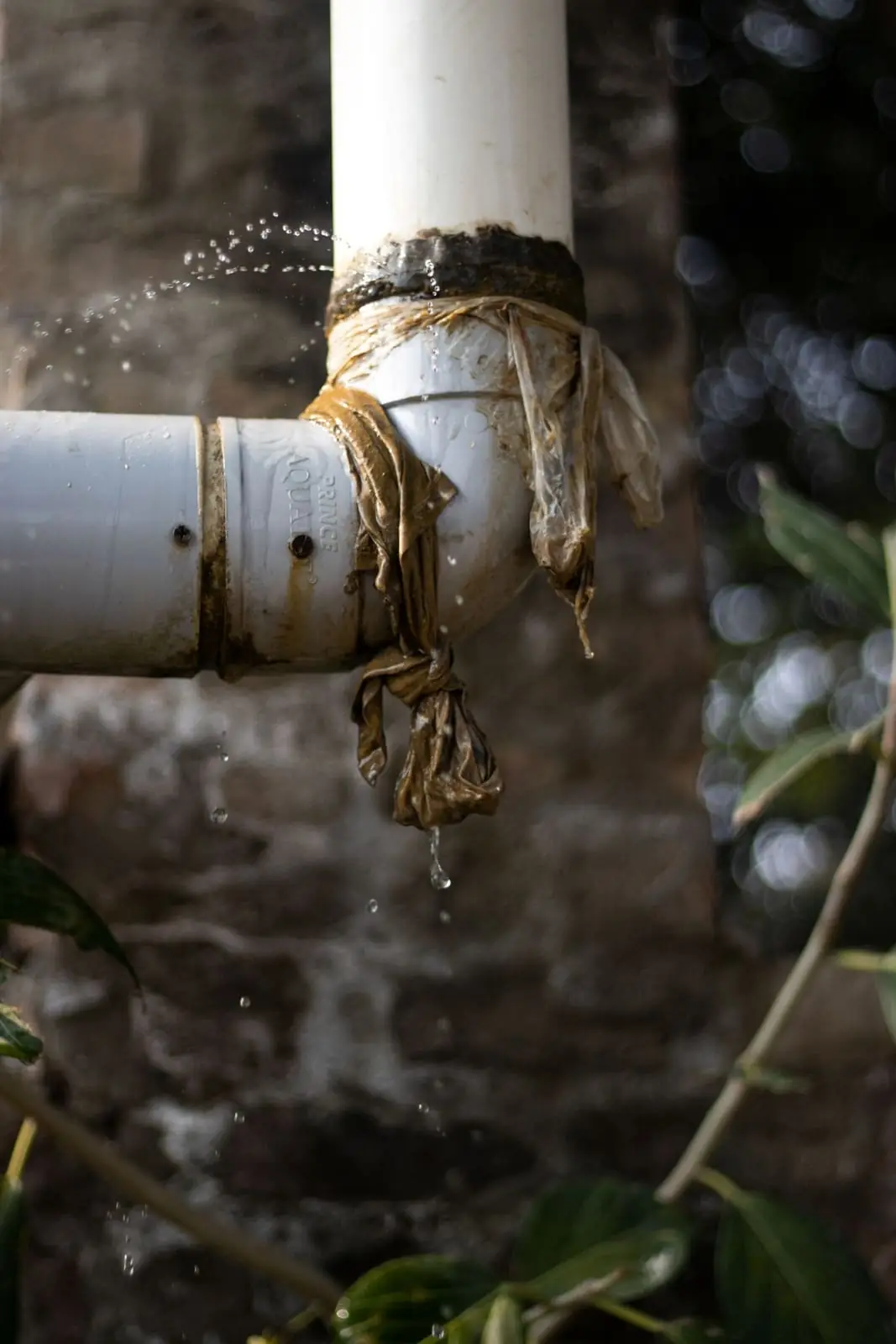
1. Shut off the main water valve
The main shutoff is usually where the water line enters the house — in a crawl space, basement, garage or utility closet, often near the water heater. If you can't find it, the curb valve at the meter box can be closed with a meter key.
- Gate valve (round handle): turn clockwise until it stops
- Ball valve (lever): turn a quarter turn so the lever is perpendicular to the pipe
2. Deal with electricity
If water is near outlets, a panel, or coming through a light fixture, switch off that circuit at the breaker. Don't stand in water to do it — if you can't reach the panel safely, call the electric utility.
3. Drain the lines
Open a cold faucet on the lowest floor and flush toilets once. This relieves pressure and empties water that would otherwise keep leaking out of the break.
4. Limit the damage
Move furniture and rugs, mop standing water, and poke a small hole in a bulging ceiling with a bucket underneath — it's better than the ceiling coming down.
5. Document, then call
Photograph the break and the damage before cleanup. Then call a plumber, and your insurer. Most policies cover sudden bursts but not long-term leaks, so the photos matter.
What the plumber does when they arrive
Expect the plumber to confirm the water is off, cut out the split section, and replace it with new pipe and fittings sized to the original. On older homes they will also look along the same run for corrosion or other freeze damage, because one split is often followed by another nearby.
If water reached drywall, insulation or subfloor, the plumber fixes the pipe, and drying is a separate job. Wet materials left in place for more than a day or two can start to grow mold.
What to Do When a Pipe Bursts or Breaks: when to call a pro
- Don't use electrical outlets or switches near standing water
- Don't keep flushing or running water during a sewage backup
- Don't use chemical drain openers on a backed-up main line
What to Do When a Pipe Bursts or Breaks: common questions
Should I turn off the water heater when a pipe bursts?
If you shut off the main water supply for more than a short time, also turn a gas water heater to pilot or switch off the breaker on an electric one. That protects the tank and heating elements while no new water comes in.
Does homeowners insurance cover a burst pipe?
Sudden, accidental bursts are commonly covered, but damage from a long, slow leak or from a pipe that froze in an unheated home may not be. Photograph everything and call your insurer before major repairs.
What's the first thing to do when a pipe bursts?
Close the main water shutoff, then turn off power to any area where water is near outlets or appliances. Open a low faucet to drain the remaining pressure.
Does homeowners insurance cover a burst pipe?
Many policies cover sudden water damage from a burst pipe, but not the pipe itself or gradual leaks. Photograph the damage before cleanup and call your insurer early.
Why do pipes burst after the cold is over?
Ice inside the pipe builds pressure and splits it, but the leak often appears only when the ice thaws and water flows again.
Every home differs; editorial standards.