
Start with where it happens
Turn on several faucets. If only one is weak, the problem is at that fixture. If they're all weak — especially upstairs or when two run at once — the problem is in the supply.
One fixture
- Unscrew and rinse the faucet aerator
- Soak the showerhead in vinegar to dissolve scale
- A single-handle faucet with low flow on one side may need a new cartridge
Whole house
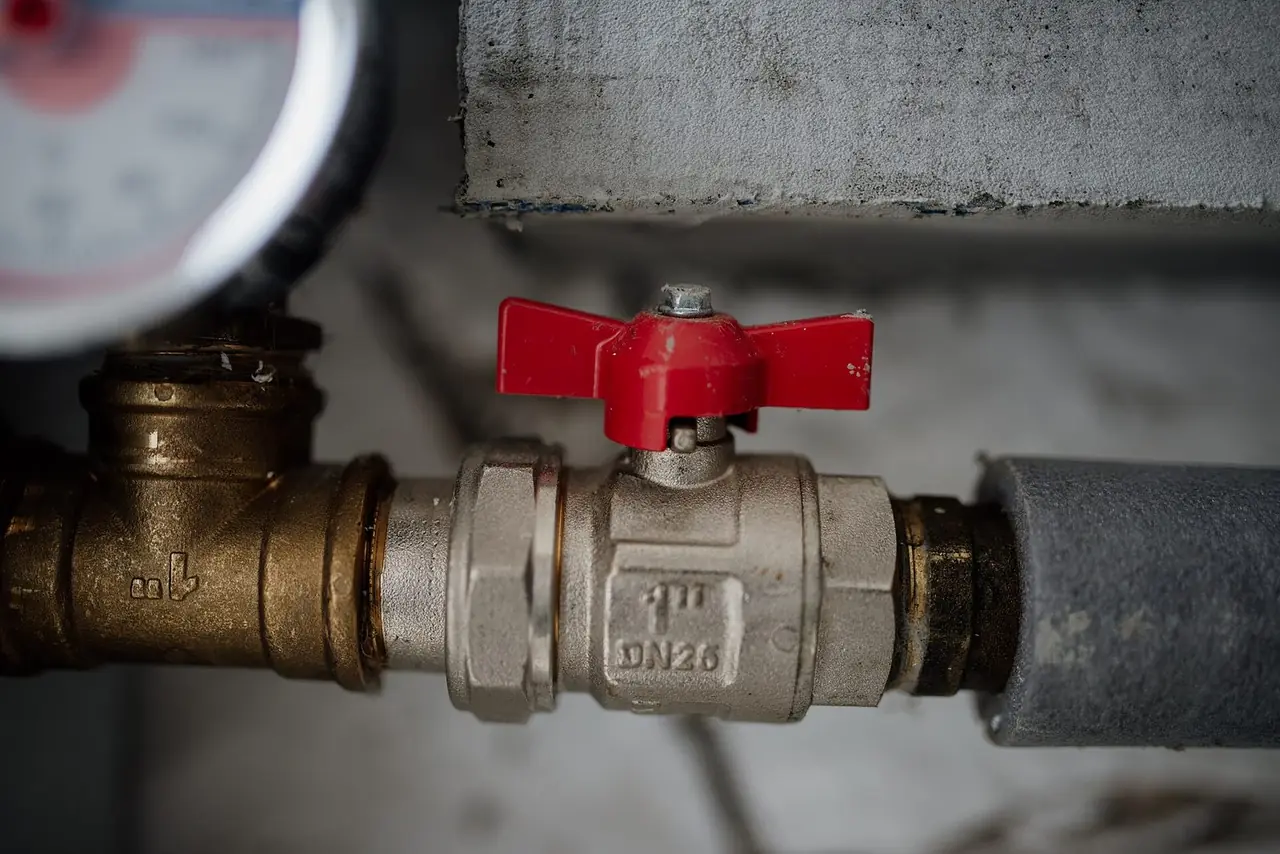
Check that the main shutoff is fully open. Many homes have a pressure regulator on the main line; when it fails, pressure can drop — or climb dangerously high. A drop that happened suddenly can also mean a leak in the service line between the meter and the house.
Old pipe
In homes with galvanized steel supply pipe, pressure fades slowly over years as rust narrows the inside of the pipe. Cleaning doesn't fix it; repiping does. Homes on private wells have their own causes, usually the pressure tank or pressure switch.
What a plumber can fix
The plumber measures static pressure at a hose bib with a gauge. Low readings throughout the house point to a failing pressure-reducing valve, a partly closed main valve or a leak in the service line. Low pressure at one fixture usually means a clogged aerator or cartridge. Corroded galvanized pipe in older homes may need repiping.
What Causes Low Water Pressure: when to call a pro
- Weak shower or faucet flow
- Pressure drops when another fixture runs
- Pressure dropped suddenly
- Banging pipes (pressure too high is also a problem)
What Causes Low Water Pressure: common questions
What is normal household water pressure?
Most homes run between about 40 and 80 psi. Many plumbers aim for around 50 to 60 psi to protect fixtures and appliances.
Can high water pressure be a problem too?
Yes. Pressure above about 80 psi wears out valves, supply lines and water heaters faster. A pressure-reducing valve brings it down.
Why is my water pressure low all of a sudden?
A utility issue, a failed pressure-reducing valve, or a partly closed main valve are common causes. Ask neighbors first.
What water pressure is too high?
North Carolina code limits house distribution pressure to 80 psi under no-flow conditions.
Every home differs; editorial standards.