
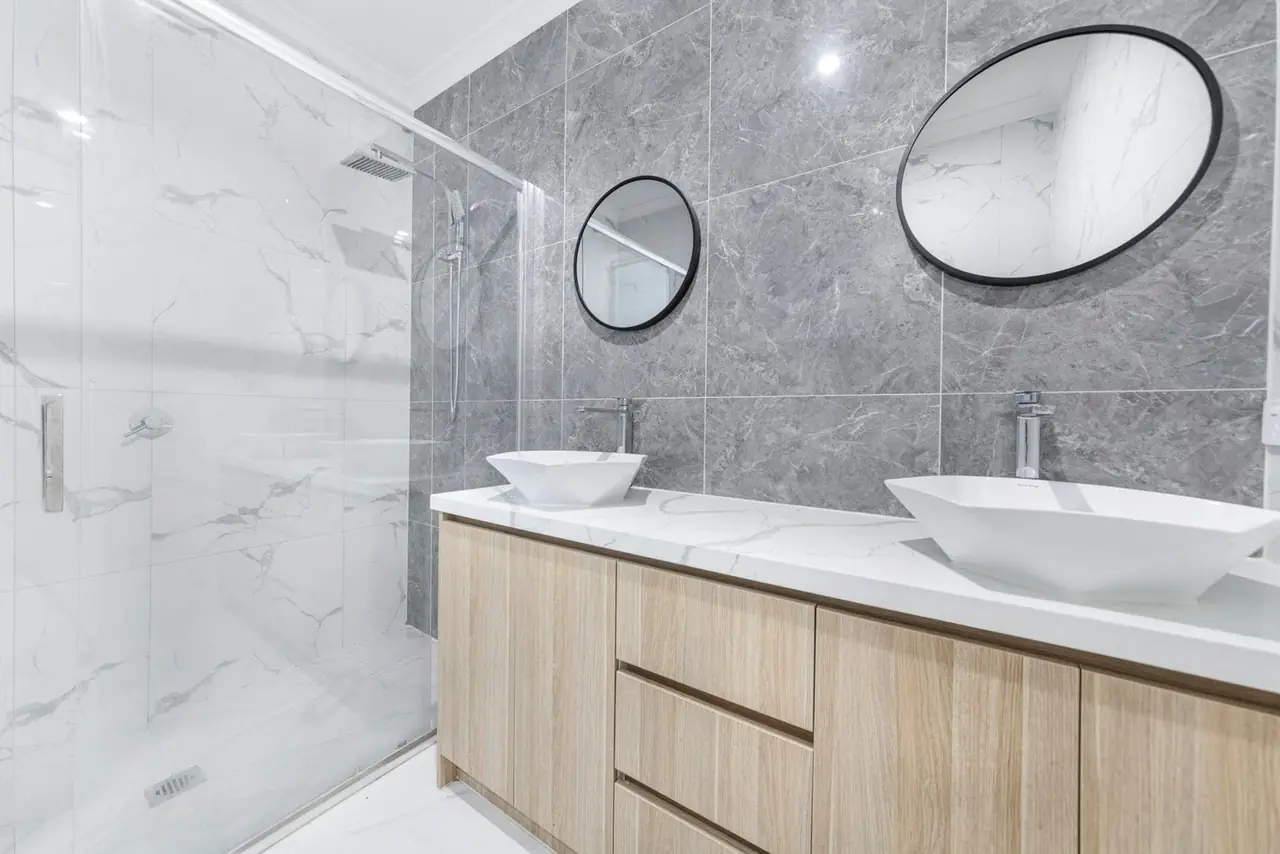
Decisions that drive the rough-in
- Where the toilet, sink, tub and shower go
- Shower valve type (pressure-balance or thermostatic) and trim brand
- Tub-to-shower conversion or curbless shower drain
- Kitchen island sink (needs a vent solution)
- Supply line material (PEX or copper) and shutoff valves
Moving fixtures
Supply lines move easily. Drains are the constraint: they need slope (usually 1/4 inch per foot) and proper venting. On slab homes, moving a drain means cutting concrete; in crawl-space homes it's much simpler.
Do it while the walls are open
Replace old galvanized supply lines, add accessible shutoff valves, and choose the shower valve once, since changing it later means opening tile. See shower and tub valve repair and faucet and fixture repair.
Permits and inspections
Most plumbing changes need a permit, with a rough-in inspection before walls close and a final inspection. The licensed plumber pulls it. See remodel plumbing.
Bathroom & Kitchen Remodel Plumbing Guide: when to call a pro
- Moving a sink, toilet or shower
- Converting a tub to a walk-in shower
- Adding a bathroom or laundry
- Replacing old pipe while walls are open
Bathroom & Kitchen Remodel Plumbing Guide: common questions
Can I move a toilet to another spot?
Usually, but it depends on drain slope and venting; on a slab foundation it requires cutting concrete.
Should I replace the shower valve during a remodel?
Yes, if it's old. It's inexpensive while the wall is open and much harder later.
Every home differs; editorial standards.