
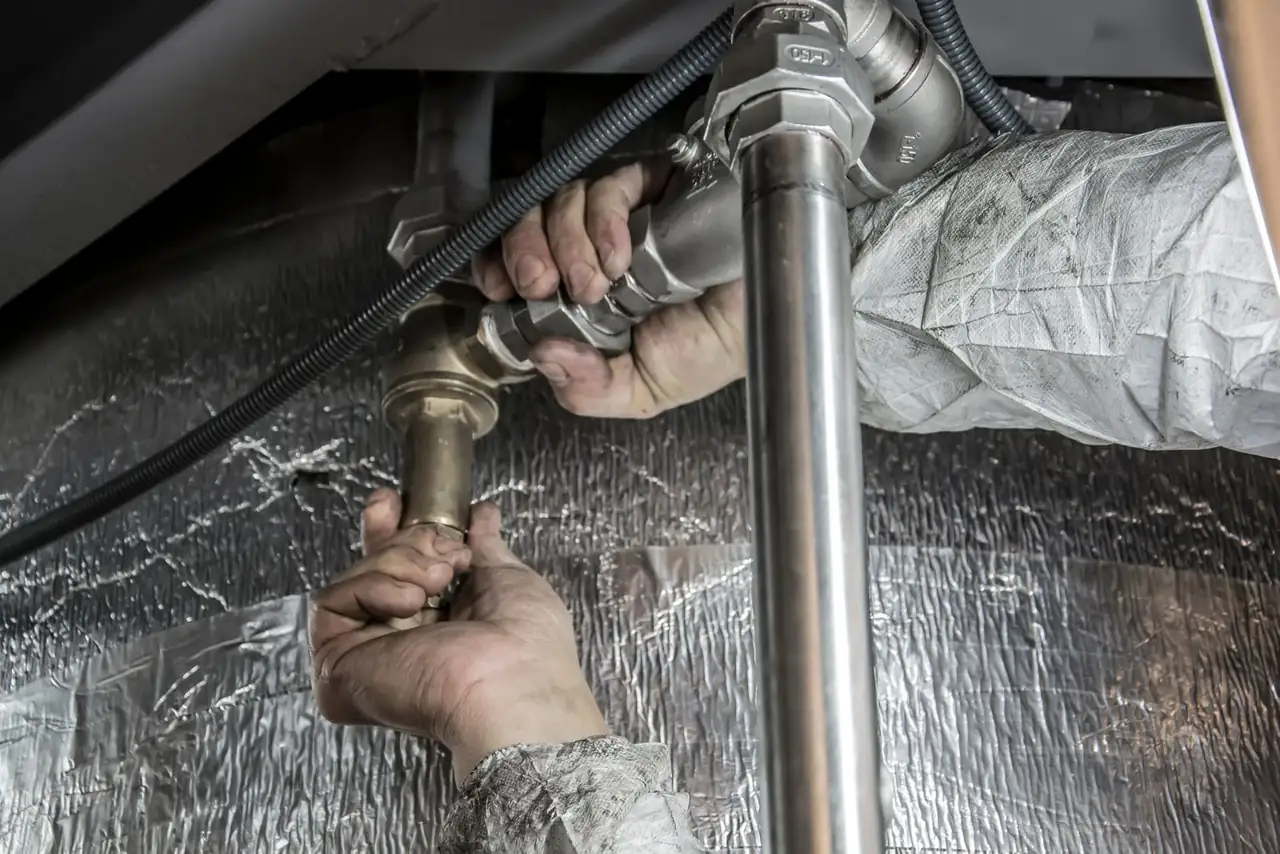
Galvanized pipe replacement
Galvanized steel supply pipe corrodes from the inside, so its opening narrows over decades until pressure drops and hot water turns rusty. It can't be cleaned out; the lasting fix is replacing it, usually with PEX or copper.
Galvanized steel was common in homes built before the 1960s. Its zinc coating wears away inside, and rust builds until the pipe is a fraction of its original size.
Leaks start at threaded joints, where the pipe wall is thinnest. Replacing one section often moves the next leak down the line, which is why whole-system replacement is common.
Signs you need galvanized pipe replacement
- Low pressure in every fixture
- Brown or rusty hot water
- Leaks at threaded fittings
- Gray metal pipe that a magnet sticks to
How galvanized pipe replacement is done
- 1
Identify
Confirm the pipe material and where it runs, including the service line.
- 2
Plan
Replace the whole system or the worst sections first.
- 3
Replace and test
Install new pipe, pressure-test and pass inspection.
What affects the cost of galvanized pipe replacement
- How much galvanized pipe remains
- Access and wall openings
- Whether the service line is also galvanized
- Permit
Ask for the trip fee and the total price before work starts.
Need galvanized pipe replacement? Call now
SteadWell is a free referral service, not a plumbing company. Calling (833) 753-0180 connects you with an independent, licensed plumber who serves your ZIP code; the plumber quotes and performs the work. Calls may be recorded.
Galvanized pipe replacement: common questions
How do I know if I have galvanized pipe?
Galvanized steel is dull gray with threaded fittings, and a magnet sticks to it, unlike copper or plastic.
Can galvanized pipes be cleaned out?
No. Corrosion is part of the pipe wall; replacement is the fix.
Is galvanized pipe a health risk?
Old galvanized pipe can collect lead from upstream sources; if you're concerned, have your water tested.