
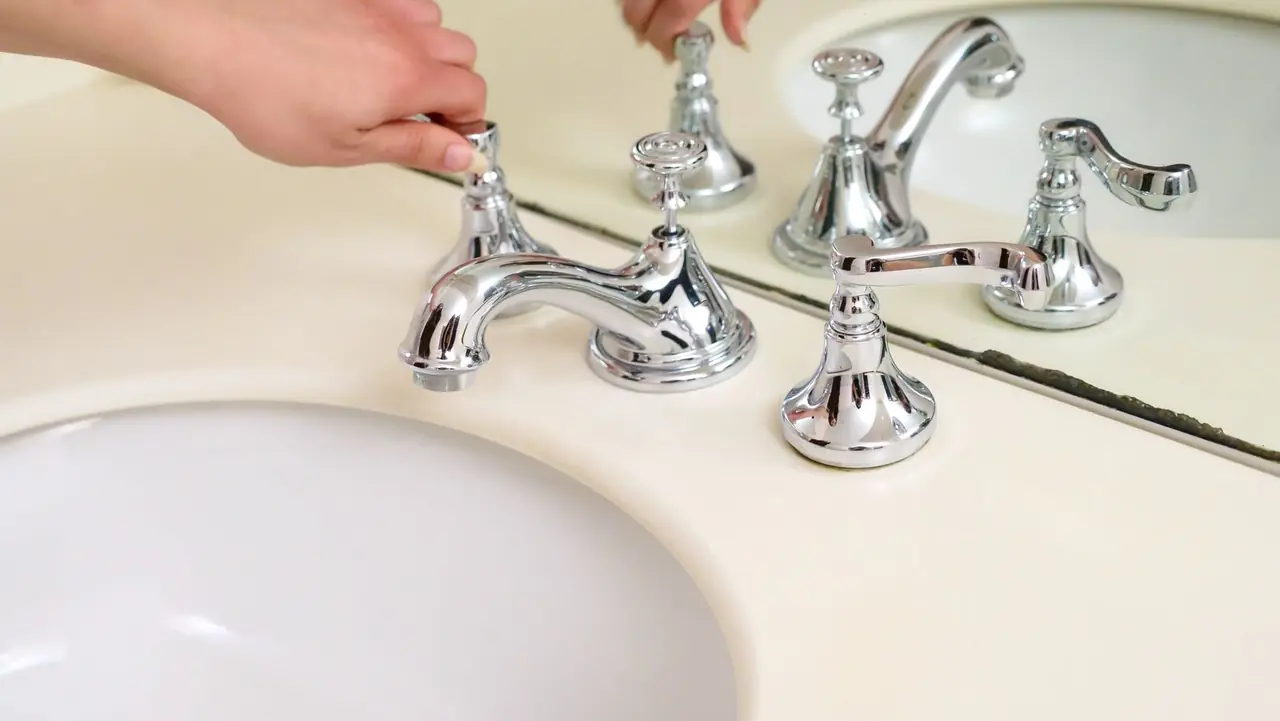
Faucet installation and replacement
Installing a faucet means matching it to the sink's holes and spread, shutting off the supply, removing the old faucet, and connecting the new one with new supply lines. Worn shutoff valves under the sink are often replaced at the same time.
Most faucet swaps are straightforward when the new faucet fits the existing holes. The common snags are corroded mounting nuts, stuck shutoff valves that leak once turned, and sinks with a different hole layout.
Kitchen faucets with pull-down sprayers also need space under the sink for the hose and counterweight.
Signs you need faucet installation
- A dripping faucet that's not worth repairing
- A remodel or new sink
- Corroded or loose faucet
- Wanting a different style or sprayer
How faucet installation is done
- 1
Check fit
Confirm hole count and spread, and check the shutoff valves.
- 2
Remove and install
Remove the old faucet and install the new one with new supply lines.
- 3
Test
Flush the lines, check for leaks and test the sprayer and drain.
What affects the cost of faucet installation
- Faucet type
- Shutoff valve replacement
- Corroded or hard-to-reach fittings
- Sink or countertop changes
Ask for the trip fee and the total price before work starts.
Need faucet installation? Call now
SteadWell is a free referral service, not a plumbing company. Calling (833) 753-0180 connects you with an independent, licensed plumber who serves your ZIP code; the plumber quotes and performs the work. Calls may be recorded.
Faucet installation: common questions
Will a new faucet fit my sink?
Check the number of holes and the spread (distance between handle holes). Deck plates can cover extra holes.
Should I replace the shutoff valves too?
If they're old or stiff, yes. Old valves often leak once they're turned after years in place.
Repair or replace a dripping faucet?
A worn cartridge is often a cheap fix; an old, corroded faucet is usually better replaced.