
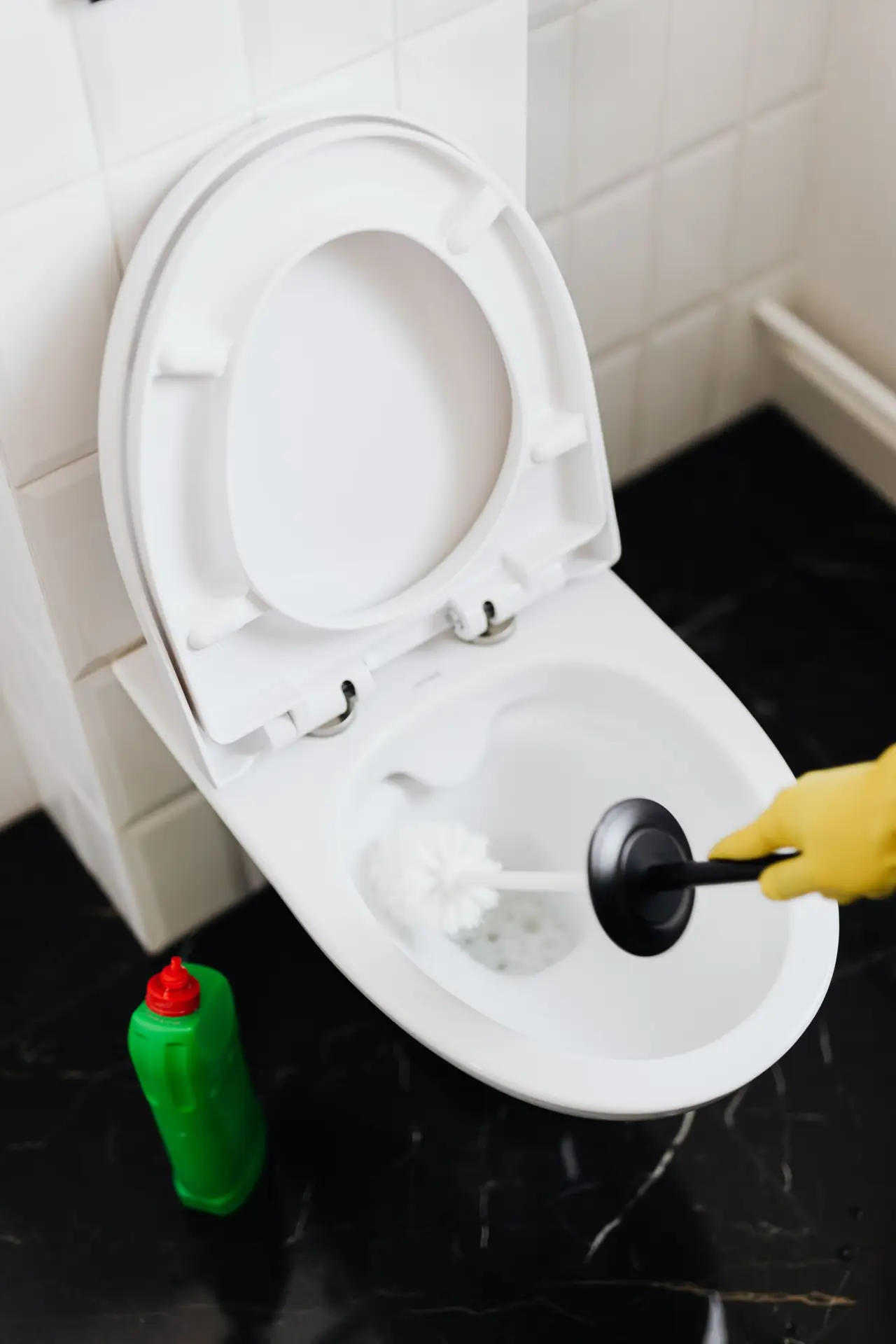
The four common causes
Work through these in order:
- Wipes, paper towels or too much paper, even "flushable" wipes, which don't break down like toilet paper
- An object stuck in the trap, such as a toy, toothbrush or cap, that lets water through but catches paper
- A blocked plumbing vent, which slows the flush and leaves a weak swirl
- A partial clog or roots in the main sewer line, which affects the lowest drains first
Clues that point to the main line
If the toilet clogs and the tub or shower drain gurgles when it flushes, or water rises in the shower when the washer drains, the blockage is probably past the toilet, in the main line. Charlotte-area homes with older clay or cast iron laterals under mature trees see this often.
What you can try
A flange plunger (the kind with a rubber sleeve) is the right tool for toilets. Avoid chemical drain cleaners: they rarely clear toilet clogs and can damage the bowl and old pipes. A closet auger can reach objects in the trap.
When to call a plumber about repeat clogs
Call if clogs return within days, if more than one drain is slow, or if you suspect something is stuck in the trap. A plumber can pull the toilet, run a camera down the line and find the actual cause instead of clearing the same clog again.
Why Does My Toilet Keep Clogging: when to call a pro
- Several drains are slow at once
- Water comes up in a different fixture
- You've used chemical cleaners — tell the plumber before they open the line
Why Does My Toilet Keep Clogging: common questions
Are flushable wipes really flushable?
Not in practice. They don't break apart quickly and are a common cause of repeated toilet and sewer clogs.
Should I replace an old low-flow toilet?
Early low-flow toilets from the 1990s often clog easily. Modern high-efficiency models flush much better with similar water use.
Can a clogged vent cause toilet clogs?
Yes. A blocked vent weakens the flush, so waste doesn't clear the trap fully.
Every home differs; editorial standards.